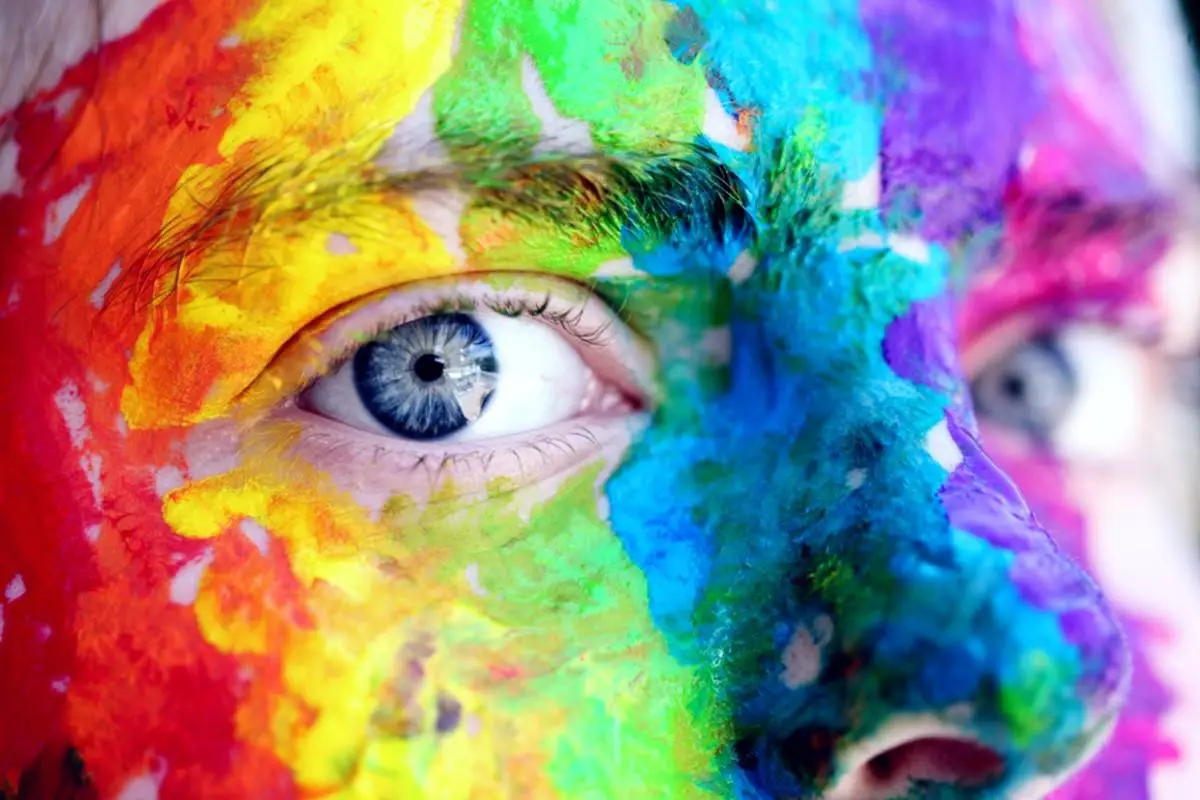
Imagine meeting someone with bright violet eyes. They would be stunning and unforgettable. In movies and books, purple eyes often belong to magical or mysterious characters. This makes people wonder: Do violet eyes really exist in real life? Or are they only found in fantasy stories?
Eye color is determined by a pigment called melanin. Brown eyes have lots of melanin. Blue eyes have much less. Green and hazel eyes fall somewhere in between. Violet eyes would need a very special set of circumstances. They are extremely rare, if they exist at all.
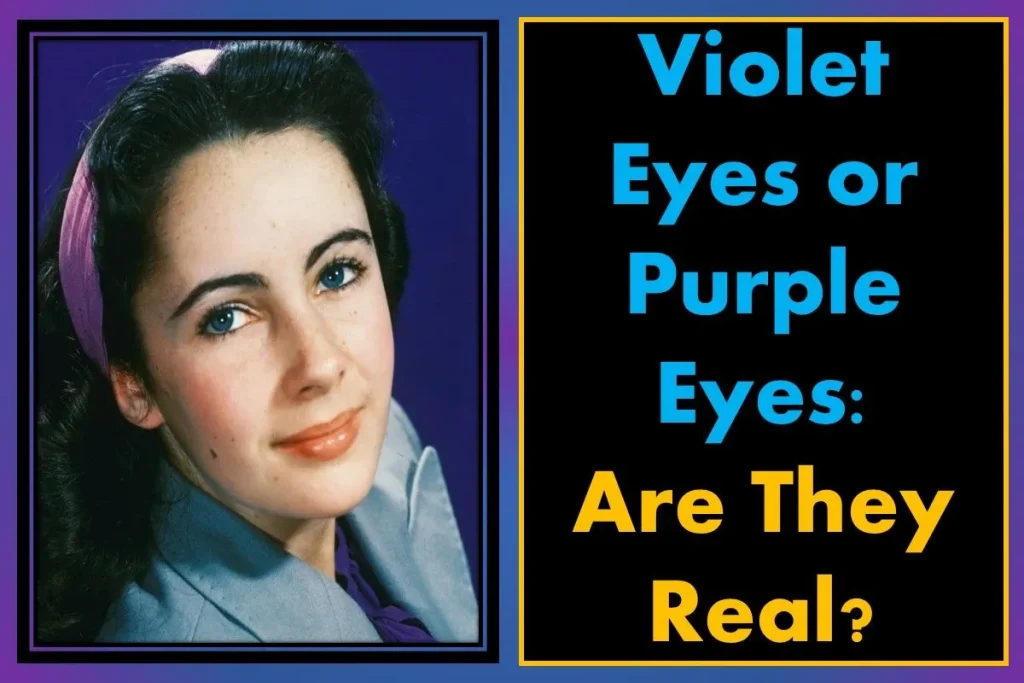
The most famous example is the actress Elizabeth Taylor. Many people believed she had violet eyes. Her eyes did look purple in certain lights and photographs. But was that her real eye color, or just a trick of light and makeup?
The truth about violet eyes is fascinating. It involves genetics, light, and even some eye conditions. While true bright purple eyes are probably not real, some people do have eyes that can appear violet under the right conditions.
Let’s explore the truth about violet or purple eyes. We will look at whether they are real and what causes this rare and beautiful eye color.
Are Violet or Purple Eyes Real?
Purple eyes are a relatively rare eye color that is considered to be very beautiful. They are caused by a lack of pigment in the iris, which allows the blue color of the iris to show through more prominently.
Although they are considered to be desirable eye colors, purple eyes are actually quite rare, occurring in only a few people. Elizabeth Taylor is one of the very few people with violet eyes or purple eyes.
Whether you call them violet eyes or purple eyes, these colors are said to be more common in people with light skin and hair
What Causes Violet or Purple Eyes?
When most people think of eyes, they think of different colors such as brown, blue, green, and hazel. But what about violet eyes? What causes them, and how rare are they?
There is no real consensus on what causes rare violet eyes, but some scientists believe that it has something to do with the light reflecting off the iris in a certain way.
Others believe that it has to do with the amount of melanin in the iris.
Eye color is determined by a number of genes inherited from parents. Eye color can be affected by the environment, but the basic color will remain the same. The pigmentation of the iris determines eye color.
Additionally, gene mutations cause some people in a family to have unusual eye colors when others in the family do not.
Violet or purple is an actual color that’s a very rare form of blue. It requires a special form of light scattering in the iris by the rare distribution of melanin pigments on the iris stroma.
Alexandria’s Genesis & Violet Eyes or Purple Eyes
Alexandria’s genesis or Alexandria syndrome became a talking point in the early 2000s in reference to a disease that was referred to as causing violet eyes.
It was later announced that no Alexandria’s disease had been found, merely that it was an element of fantastic imagination.
However, there is no evidence that supports this symptom, and the ancient view is that people who present Alexandria’s genesis has the following characteristic features.
- Perfect vision
- Purple or violet eyes
- Light skin that does not burn in the sun
- No body hair
- No menstrual process in women, but they can bear children
- Very strong immune system that can protect the body from any illnesses
- Well-balanced metabolism
- The longer life expectancy of around 120-150 years
Numerous diseases can greatly affect a person’s eye color, though there has been no evidence that the Alexandria syndrome is responsible for improved eye color or body functions.
What Conditions Make Eyes Turn Purple or Violet?
All eye colors besides brown are due to the absence of a pigment, not due to a specific colored pigment in the iris. There are a few potential causes of purple or violet eyes.
1. Amount of Melanin Pigment
Melanocytes are the cells in the human body that produce melanin, which is the same compound that reacts with sunlight to make skin tanned.
Melanin is a brown pigment, and its density in the iris determines the eye color of every individual.
The melanocytes in a child’s eyes are not fully developed. Thus, the color of the iris changes as they grow. Infants are usually born with brown eyes.
Some Caucasian babies are similarly born with gray or blue eyes. The color of their irises may change as they grow older. In rare instances, the color changes to purple or violet.
2. Albinism
Albinism is a medical condition in which a body produces very little melanin. Purple eye syndrome may occur as a natural effect of this condition.
3. Genetics
If a Caucasian baby is born to parents with blue eyes or gray eyes, there is a likelihood of developing violet eyes or any combination of gray or blue eyes.
4. Two Different Colored Eyes or Heterochromia
Heterochromia is a condition in which the irises of an individual’s eyes are two different colors. The condition is harmless and often hereditary.
These days, some celebrities are known for their different colored eyes, including Mila Kunis, Kate Bosworth, and Christopher Walken.
This condition occurs less than 1% of the time, and studies show that there are fewer than 200,000 people in the US with heterochromia.
Heterochromia is supposed to be caused by a genetic mutation, like Alexandria’s syndrome.
5. Eye Tumor
Tumors at the colored part of the eye or iris can change the natural color of the iris and might give rise to purple color or any other colors.
6. Uveitis
Fuchs heterochromic uveitis is an inflammation of the middle layer or uvea of the eyeball. If this condition affects the iris, the color of the eyes might get changed.
Although the cause of Fuchs heterochromic iridocyclitis is unknown, the end result might be sight threatening if it gives rise to glaucoma.
7. Horner’s Syndrome
Horner’s Syndrome is a rare neurological disorder that results from damage to the sympathetic nervous system.
This damage can be caused by injury, surgery, or a tumor. The most common symptoms of Horner’s Syndrome are drooping eyelids, smaller pupils, and less sweating on the affected side of the face.
Treatment for Horner’s Syndrome varies by the severity of the condition. For mild cases, your doctor may recommend self-care measures.
For moderate to severe cases, treatment may include medications, surgery, and physical therapy. In some cases, patients will benefit from a combination of treatments.
Patients with Horner’s Syndrome may experience decreased vision, change in eye color, as well as problems with their speech and swallowing. They may also have a decrease in hearing.
Patients who have undergone facial nerve surgery are at risk of developing complications from the procedure, such as paralysis of the eye muscles.
8. Waardenberg Syndrome
Rare genetic skin conditions called Waardenburg syndrome often cause eye color, hair color, and skin texture to change.
People with Waardenburg syndrome often have blue eyes that might seem purple or violet in certain lighting, and sometimes the eyes can have two different colors.
People with Violet or Purple Eyes
There is a popular myth that famous American actress Elizabeth Taylor’s eye color was violet or purple. Elizabeth Taylor’s eye color has been the subject of much speculation for years.
Some reports stated that Elizabeth’s eyes were green or purple, whereas others say they were blue.
A Word from Health Kura
It would seem that violet eyes or purple eyes may be a real thing, but more research is needed. Some people may have a genetic mutation that results in the appearance of violet or purple eyes.
So far, there is no scientific proof about exactly what causes purple or violet eyes, but it is an interesting research topic.
If you have violet or purple eyes and have always wondered about their origin, you may want to speak to your doctor about getting tested for the mutation, or other eye conditions linked to purple eyes or violet eyes.
Frequently Asked Questions
1. Are violet eyes real?
True violet eyes are extremely rare and most experts say they are not naturally occurring in humans. What looks like violet eyes is usually a very deep shade of blue. The blood vessels in the back of the eye can reflect light and add a reddish tint. When this red tint mixes with a light blue eye, it can create a violet or purple appearance in certain lighting.
2. What causes eyes to look violet?
Eyes can look violet due to a combination of low melanin and light reflection. People with very little melanin have blue eyes. But the blood vessels in the iris and the retina at the back of the eye are red. Sometimes, the red from these blood vessels reflects through the blue, creating a purple hue. Certain lighting, clothing colors, and makeup can also make blue eyes appear more violet.
3. Did Elizabeth Taylor really have violet eyes?
Elizabeth Taylor’s eyes were famous for looking violet. She had a rare condition called distichiasis, which gave her a double row of eyelashes. This made her eyes look darker and more dramatic. She also had very deep blue eyes. In certain lights, and with her dark lashes and specific makeup, her eyes appeared a stunning violet color. Most experts agree her eyes were a very deep, dramatic blue, not truly purple.