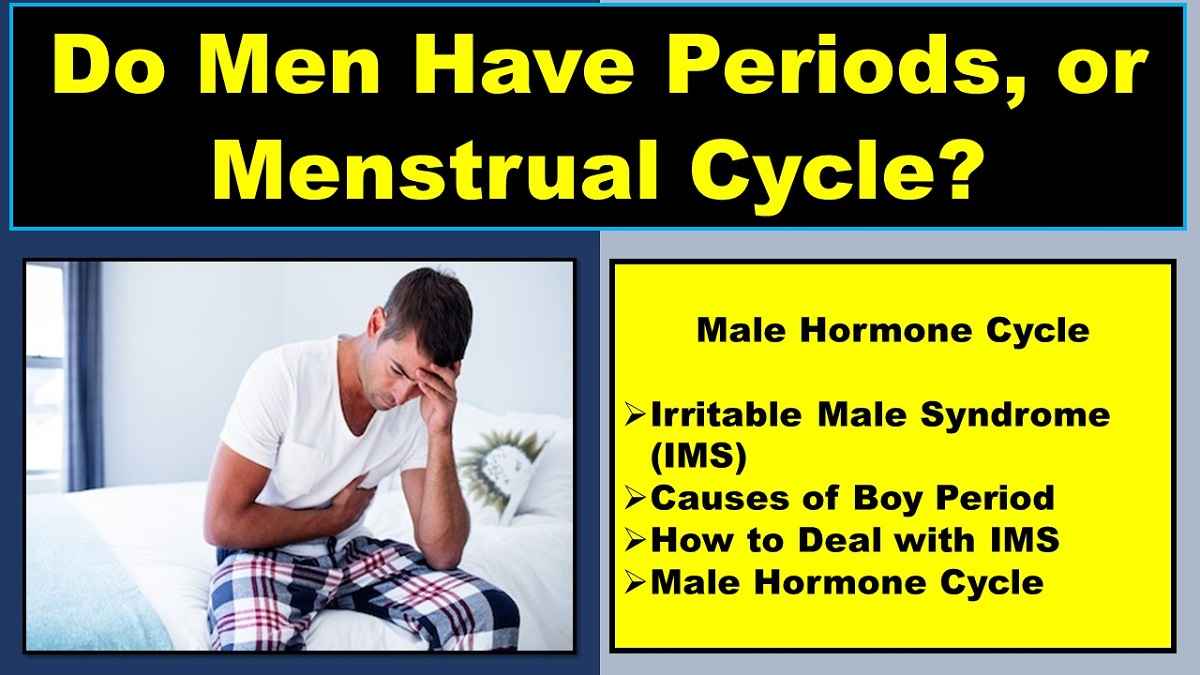
Do men have periods? It is a question that comes up often. The short answer is no. Men do not have menstrual periods. They do not have a uterus or ovaries, so they cannot menstruate. But the question is more interesting than it seems. Men do have hormonal cycles.
Hormones are not just for women. Men have hormones too. Testosterone is the main male hormone. But men also have estrogen and progesterone, just in smaller amounts. These hormones fluctuate throughout the day and over longer periods.
Some men experience what is called Irritable Male Syndrome, or IMS. This is a condition where men have cycles of moodiness, irritability, and low energy. It is linked to drops in testosterone. Some researchers call this a “male period.”
Men can also have symptoms similar to PMS. They might feel moody, tired, or anxious. They might have changes in appetite or sleep. These symptoms often come from stress, lack of sleep, or hormonal changes.
Let’s explore the question: do men have periods? We will look at male hormone cycles, Irritable Male Syndrome, and how men experience hormonal changes.
Do Men Get Periods?
Have you ever wondered if men have periods and, if so, what the symptoms would be?
Yes, men have periods. Now I know that statement might come as a shock to some people but hear me out on this. Like women, men experience hormonal shifts and changes.
According to the survey of The Telegraph, one-fourth of British men believe they have a ‘male period’. So, ‘man period’ is not just a funny topic in medical science anymore.
Men aren’t just “manlier” versions of women — they have a different set of hormones.
Every day, a man’s testosterone levels rise in the morning and fall in the evening. Testosterone levels can even vary from day to day. This diurnal variation is called the “biorhythm” of testosterone, and it’s normal.
These hormonal changes are cyclical, peaking at different points in time each day.
These cycles are known as “man-struation” or “male period,” and cause mental and physical symptoms including depression, fatigue, mood swings, irritability, headaches, and back pain.
The term “man-struation” may sound funny at first, but it accurately describes the monthly hormonal fluctuations that cisgender men experience.
Despite this information, some people deny that men have periods because the fluctuations aren’t quite as regular as women’s periods. However, this is a factual statement backed by evidence proving that male and female hormones fluctuate similarly in regular cycles.
There are numerous articles, blog posts, and books that claim that men experience mood swings, depression, and fatigue similar to the premenstrual syndrome (PMS) experienced in women.
The authors go on to say that a man’s hormone levels change just as drastically as women as they go through a monthly cycle and that these hormonal fluctuations can cause a significant impact on a man’s quality of life.

Male Hormone Cycle
Women go through a monthly hormone cycle; it begins on the first day of their menstrual cycle and ends when menstruation ends. Hormone levels change every two to five days during this cycle, but it averages about 28 days.
Men, on the other hand, don’t have a monthly hormone cycle. Instead, they experience a full hormone cycle every 24 hours.
Morning
Testosterone level is the highest in the morning compared to other times of the day. The peak level of the hormone makes the man more energetic, talkative, aggressive, competitive, and confident.
He has the ability to perform any mental and physical tasks with confidence in the morning due to the active influence of the hormone.
Owing to the peak level of testosterone, men can involve actively assemble a DIY desk, compete in a contest, work on a project solo, figure out the best driving route, enjoy passionate sex.
Afternoon
With passing times of the day, the testosterone hormone level in men goes down. During a day-long hormone cycle, the testosterone is in the middle of its cycle in the afternoon.
Although the level of testosterone hormone has declined to around half, he’s still upbeat, driven, and focused, but not as easily ticked off. Men will be more open to working with others rather than doing it alone.
The afternoon is the best time to work as part of a team, pitch clients or customers, brainstorm ideas, go on a date.
Evening
The testosterone hormone is at its lowest level in the evening. The guy is more passive, agreeable, and low-key, making this a good time to ask him for a favor or other request since he’s more likely to grant it.
Although some men still go for passionate sex at this time of the day with a low level of testosterone hormone, most of the guys feel too tired for intimacy or have difficulty maintaining an erection. They like to cuddle with their partners rather than to involve in vigorous sex.
What is Irritable Male Syndrome (IMS)?
Irritable male syndrome (IMS) is a condition that wasn’t recognized by the medical field because there’s no significant scientific evidence to support it.
Irritable Male Syndrome (IMS) is a controversial condition purported to cause migraine headaches, depression, irritability, and inability to focus on a single task.
When IMS was first introduced into the medical community there was no mention of hormones as an underlying cause.
According to the International Headache Society criteria, IMS is defined as the onset of “recurrent attacks of headaches associated with the full moon” or the onset of “recurrent headaches that cycle in or out with the phases of the moon”.
In addition to these criteria, it is also necessary to have at least three other symptoms including extreme change in mood, increased appetite, inability to concentrate, and feeling exhausted.
Irritable male syndrome (IMS) supposedly occurs when testosterone levels dip and oscillate in frequent cycles. The effects are primarily emotional and behavioral.
According to sex therapist Janet Brito, Ph.D., men’s testosterone levels can vary and the factors responsible for the fluctuation of testosterone levels are age, stress, illness, lack of sleep, change in diet habits, among others.
Although the symptoms of IMS in guys mimic some of the symptoms of premenstrual syndrome (PMS) in women, it doesn’t follow any physiological pattern the way a woman’s period follows her reproductive cycle.
Causes of ‘Men Periods’ or Dip in the Male sex hormone or testosterone level
Many factors from stress to diet habits can trigger the fluctuation of the male hormone and leads to IMS.
Some people relate IMS to ‘sympathy PMS’, the condition in which a man experiences similar feelings as the woman in his life who is dealing with PMS.
How to Deal with ‘Male Periods’ or IMS
There is no simple “cure-all” for male PMS, as it’s a different condition in every man who suffers from it. However, addressing diet, lifestyle changes, work stress, and other factors could help alleviate symptoms.
Women should be aware of their man’s changes in mood throughout the month and be sure to check on him when things get tough.
Never dismiss his issues or try to belittle them—remember, this is an issue he is dealing with every single month!
Takeaway
Men who experience irritable male syndrome (IMS) or so-called men periods frequently should visit a doctor. This isn’t because their periods resemble women’s, but because the health risks are real and significant.
If a woman in a relationship wants to avoid or alleviate the signs of male PMS or IMS, paying attention to her partner is the key.
By understanding what he’s going through and knowing how to help him, you can help bring back that old spark in your relationship. After all, healthy men make for happy women.
While we don’t have all the answers or even a clear definition of what constitutes a “male period,” it’s clear that this is an increasingly important topic that needs further study.
In the meantime, we hope that today’s post on the ‘male period’ will help spread awareness about the topic and provide readers with some useful resources for further exploring the subject.
Sources
- https://pubmed.ncbi.nlm.nih.gov/1117056/
- https://tabooau.co/blogs/blog/a-comparison-of-the-female-vs-male-hormonal-cycle-spoiler-alert-women-have-it-worse
YOU MAY ALSO LIKE
Signs and Symptoms of Pregnancy
Stages of Pregnancy: Changes in 1st, 2nd, and 3rd Trimesters
Pregnancy Miracle by Lisa Olson: Book Review
Vision changes in Pregnancy: How Pregnancy Affects the Eye
Postnatal (Postpartum) Depression: Symptoms, Causes, & Treatment
FAQs
1. Do men have a monthly hormonal cycle?
Men do not have a monthly cycle like women. Women have a 28-day menstrual cycle driven by ovulation. Men have daily hormonal cycles. Testosterone levels are highest in the morning and lowest at night. However, some research suggests men may have longer cycles too. Testosterone can fluctuate over weeks or months based on stress, sleep, and other factors.
2. What is Irritable Male Syndrome (IMS)?
Irritable Male Syndrome is a condition where men experience moodiness, irritability, anxiety, and low energy. It is linked to drops in testosterone. These drops can happen due to stress, lack of sleep, poor diet, or hormonal changes. Some researchers call IMS the “male equivalent” of PMS. It is not a monthly cycle, but men can have days or weeks where they feel emotionally off.
3. Can men have PMS-like symptoms?
Yes, men can have symptoms similar to PMS. They may feel irritable, anxious, tired, or moody. They might have trouble sleeping or changes in appetite. These symptoms are often caused by stress, low testosterone, or lifestyle factors. Unlike women’s PMS, these symptoms do not follow a predictable monthly cycle. But they are real and can affect a man’s mood and well-being.